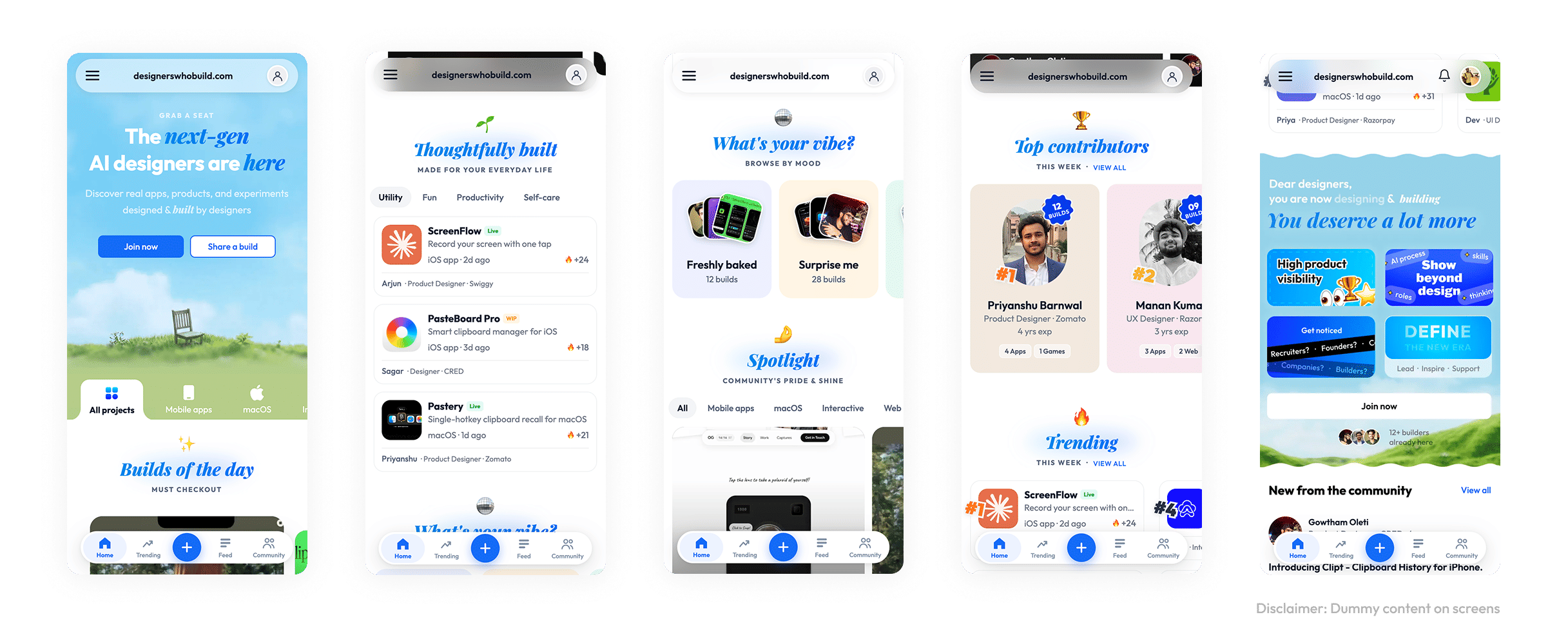
A discovery platform for AI-native creators — being designed and built solo, using AI from end to end.
Designers are no longer just designing. With AI lowering the barrier to shipping, a new kind of creator has emerged.
Designers have been creating and shipping below products and much more.
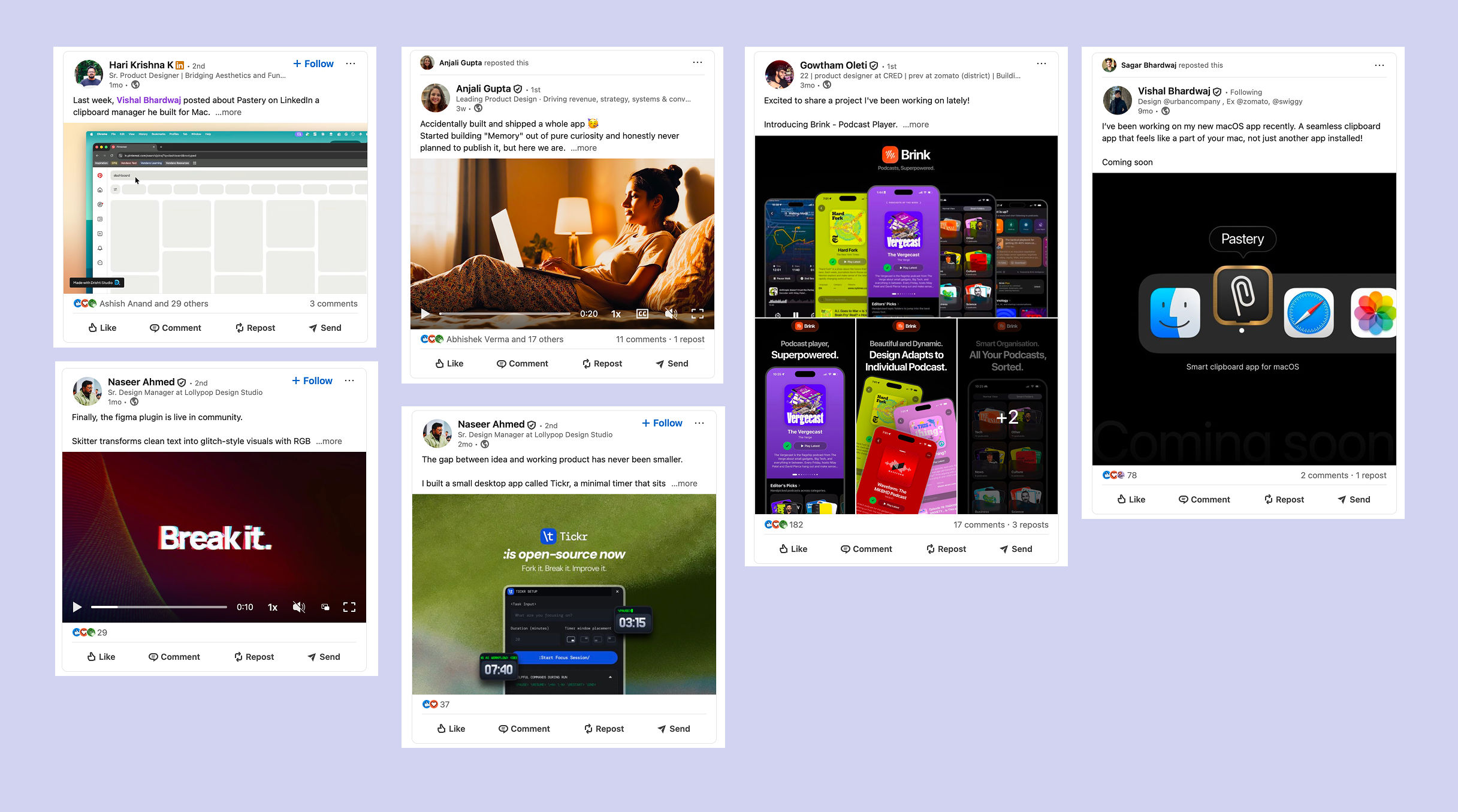
But most of this innovation is scattered across LinkedIn feeds. Discovery depends entirely on:
Which means many great products never reach the right audience.
As a designer, I felt both sides of this personally.
Each covered a slice. None served the whole person.
A platform where creators can showcase AI-built products, gain visibility, discover other builds, and validate ideas through community engagement.
Initially focused on designers — expandable to all AI-native builders.
So the project became a larger experiment in itself.
"Can I build a social platform
using AI tools alone?"
This question has changed how I approach the entire product — not just as a design brief, but as a proof of concept for what designers can do independently in 2026.
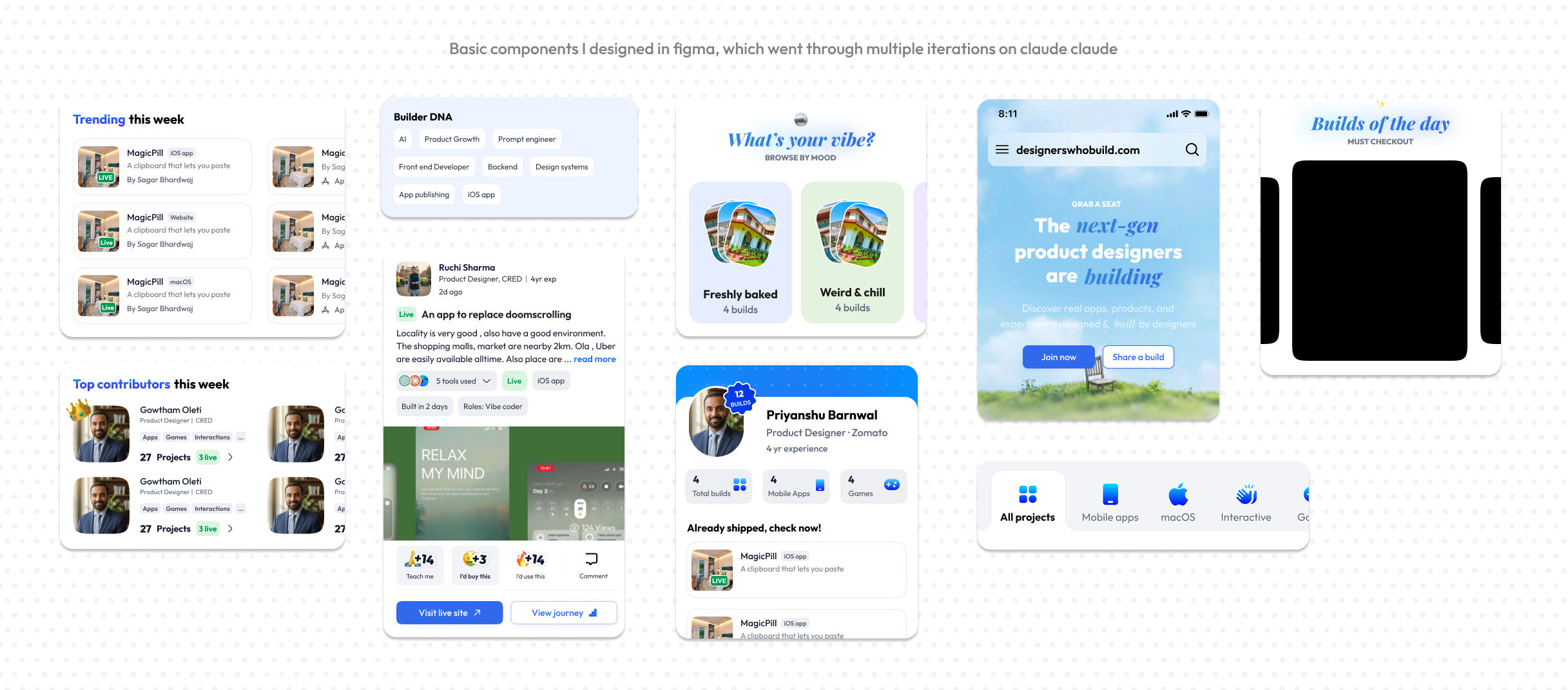
Before opening Figma, I broke the problem into eight parts: market, users, positioning, systems, execution, distribution, retention, and vision.
A repeatable loop that lets me move faster than ever before.
Initially, I struggled translating design intent into production-ready UI. So I evolved the process.
The choices that influenced what I built — and what I intentionally didn't.
No content → No users → No creators
Manual onboarding + admin publishing. With permission from creators, reposting interesting LinkedIn builds and creating profiles manually.
Build archive > Social feed
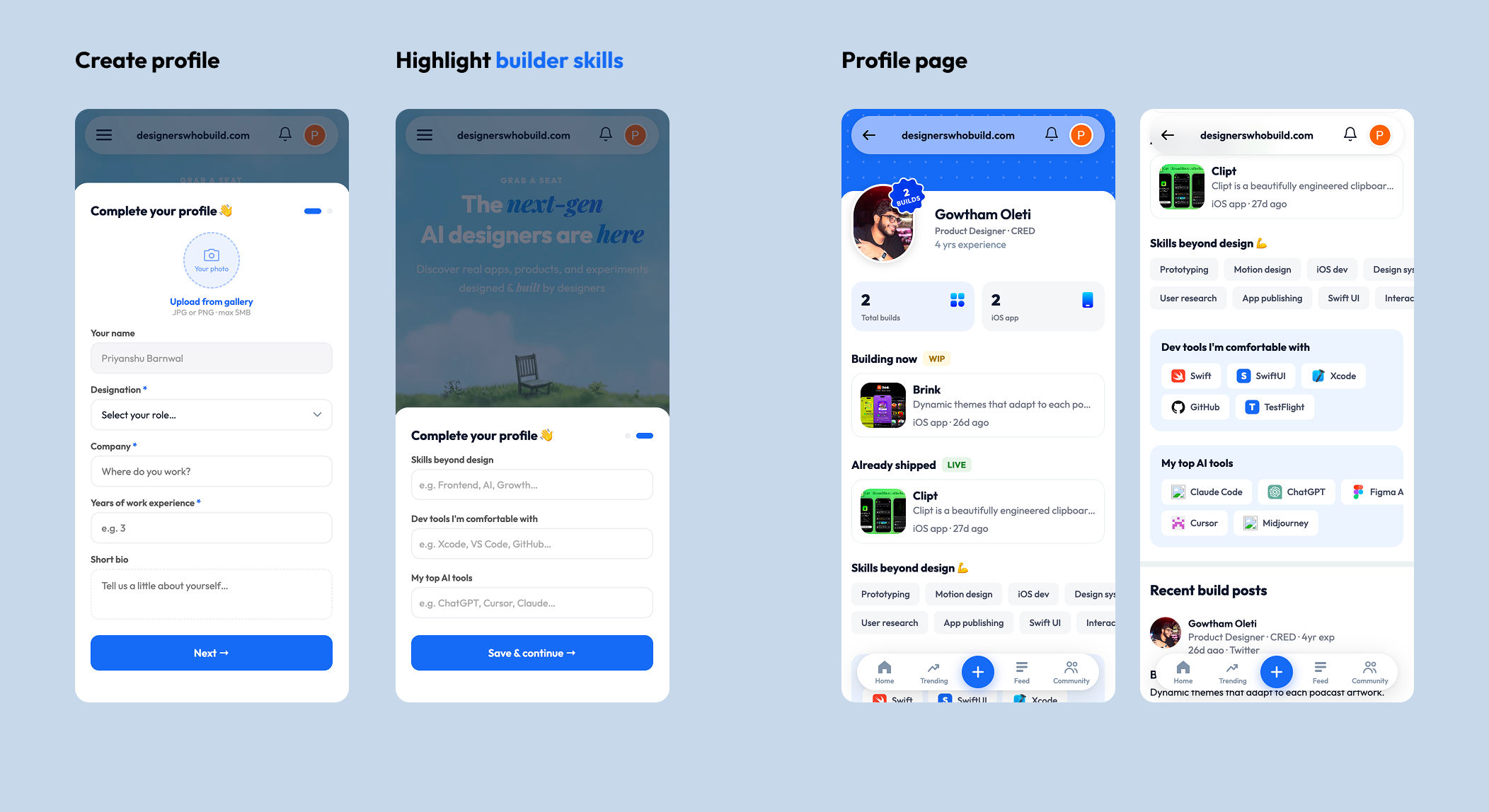
As AI blurs the line between designers and developers, I wanted profiles to showcase what people are capable of building—not just where they work. I introduced builder skills, AI workflows, and technical exposure to create a new kind of professional identity.
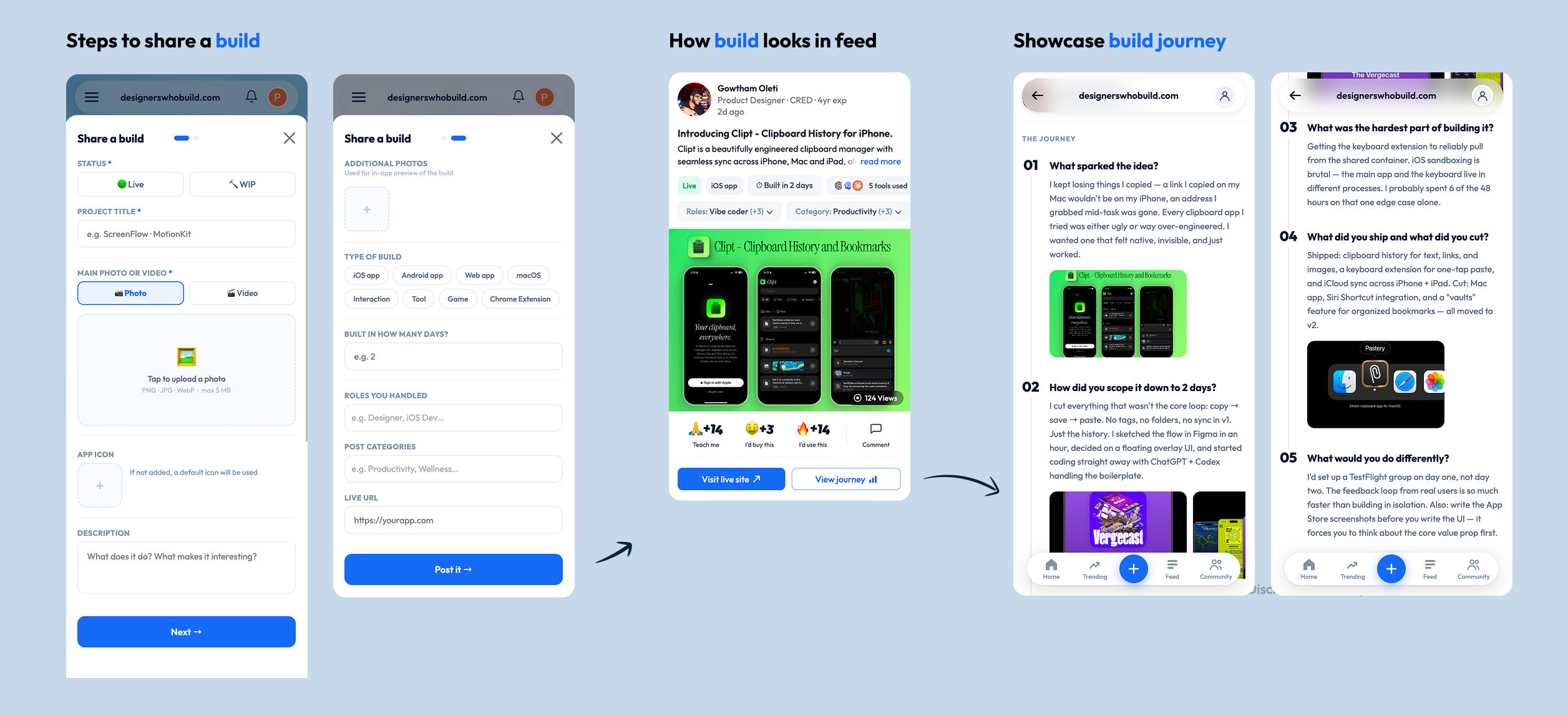
Most products disappear into feeds within days. I designed build pages to preserve the journey behind every product—the idea, constraints, decisions, tradeoffs, and learnings—so builders are remembered for how they think, not just what they launch.
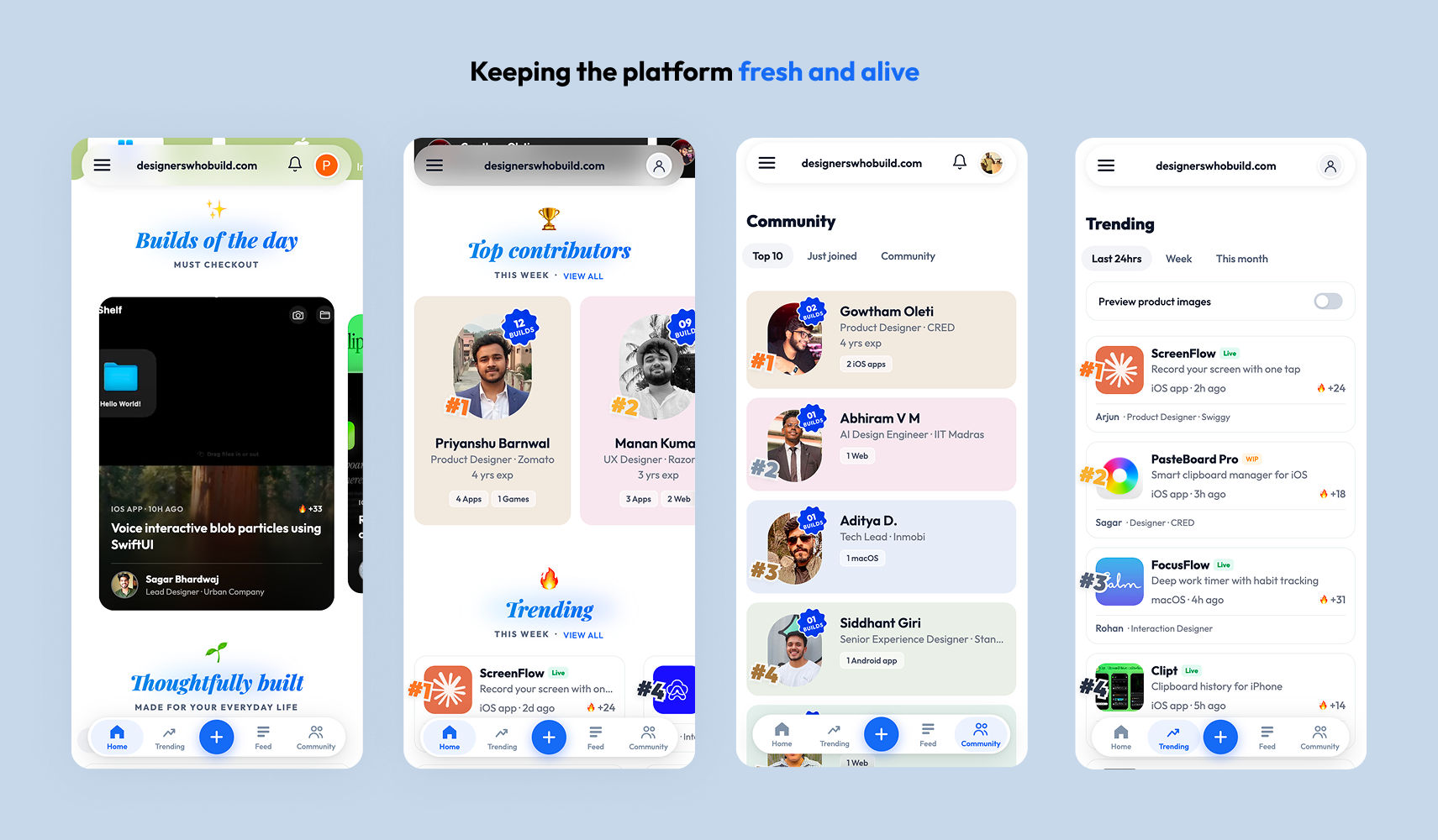
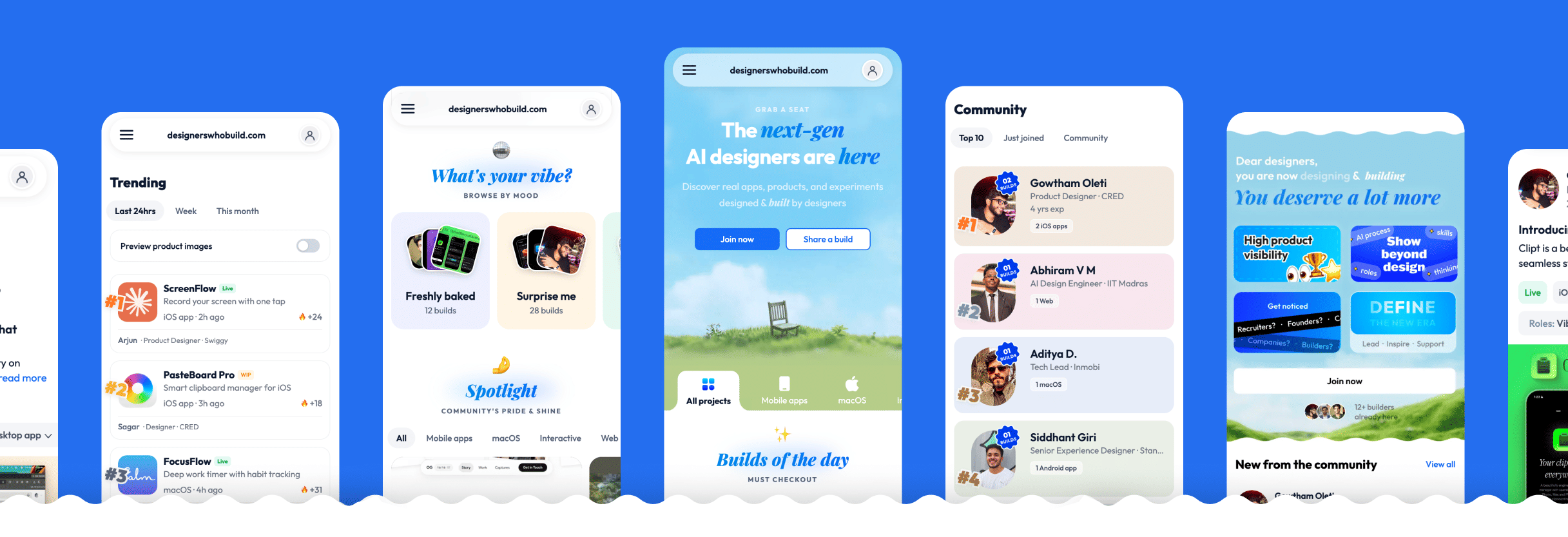
Communities go stale when the same people dominate attention. Surfaces like Just Joined, Top 10, and Trending (24hrs · Week · Month) continuously spotlight new members, fresh builds, and active contributors.
The goal wasn't just discovery — it was recognition. When people feel seen, they return, contribute again, and become part of the ecosystem.
Cards like Spotlight, What's Your Vibe, and Thoughtfully Built were designed to turn discovery into an experience, not a feed.
"Make discovery feel effortless — not algorithmic."
Instead of a basic feed, the homepage is structured around exploration — trending builds, contributor spotlights, community showcase, and category browsing. Every section designed to surface creativity, not just recency.
Here's where the build stands today — and what's left before the platform goes live.
The value is no longer just in creating screens. Because AI can build quickly — but it still needs clarity.
The designer's new edge is in:
"AI can execute at speed. Designers who understand systems can now direct at scale."
The goal is simple: get the platform in front of real creators and let the community take over.
The bigger ambition
AI has dramatically reduced the gap between "I have an idea" and "I built it." This project is proof. The plan is to keep going — open it up, let the community shape it, and see where it goes.